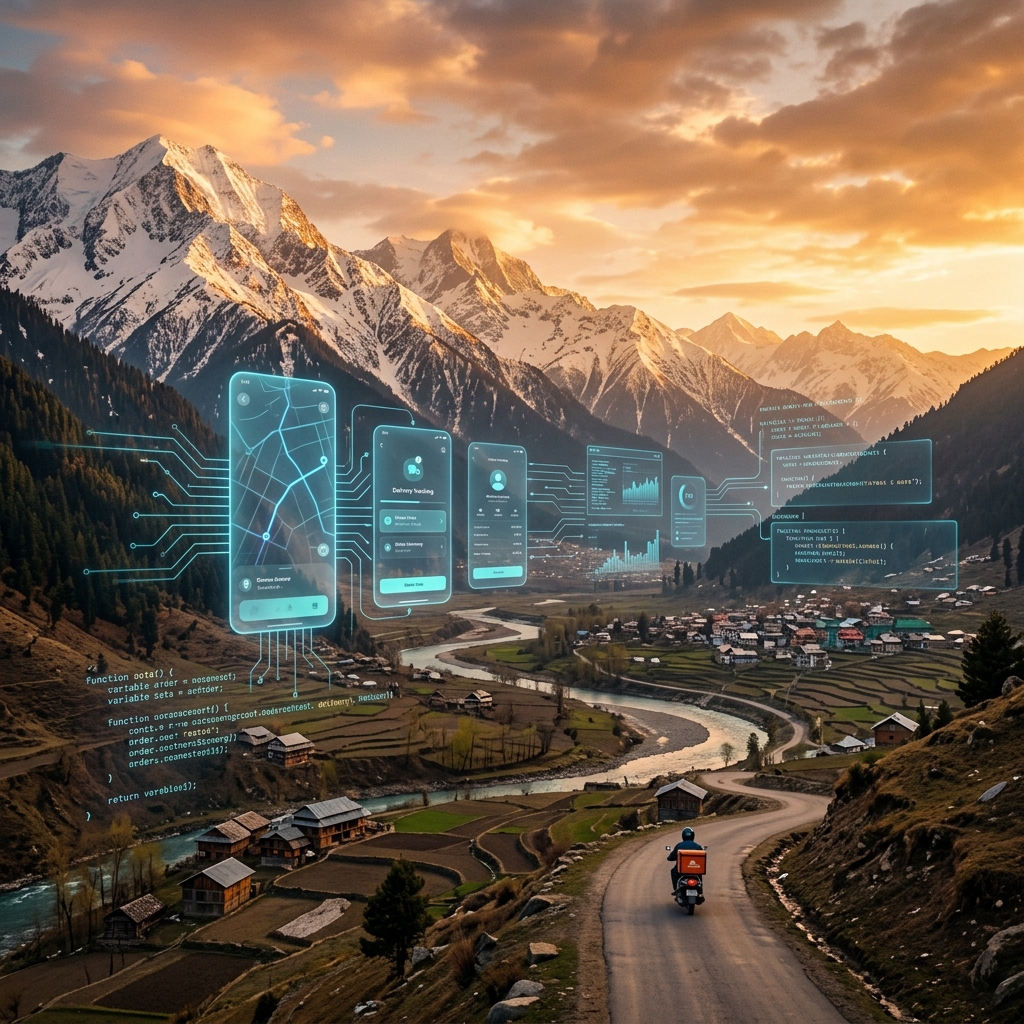

In September 2025, I launched KupwaraCart — a hyperlocal delivery platform designed specifically for Kupwara, the northernmost district of Kashmir. What started as a frustration with the lack of delivery infrastructure in our region became a full-scale e-commerce ecosystem that now serves hundreds of families across multiple categories: food, groceries, fashion, and daily essentials.
This is the story of how I built it — the technical decisions, the challenges unique to building for Kashmir, and the lessons I learned along the way. If you are a developer thinking about building something for your community, I hope this inspires you to start.
The Problem: Kashmir's Delivery Desert
Growing up in Kupwara, I watched as the rest of India got access to platforms like Swiggy, Zomato, and Blinkit. But for us? Nothing. The big platforms considered our region too remote, too risky, too unprofitable. When I needed to order something — anything — the only option was driving 30 minutes to the nearest town center and hoping the shop had what I needed.
This wasn't just an inconvenience; it was a systemic problem. Local businesses had no way to reach customers beyond foot traffic. Small shop owners were losing business to the occasional traveler who brought goods from Srinagar. The entire local economy was operating without the digital infrastructure that the rest of India takes for granted.
"If no one is going to build this for us, I'll build it myself."
That thought, which hit me during a particularly frustrating search for a birthday gift in late 2024, was the spark that became KupwaraCart.
Designing the Triple-App Architecture
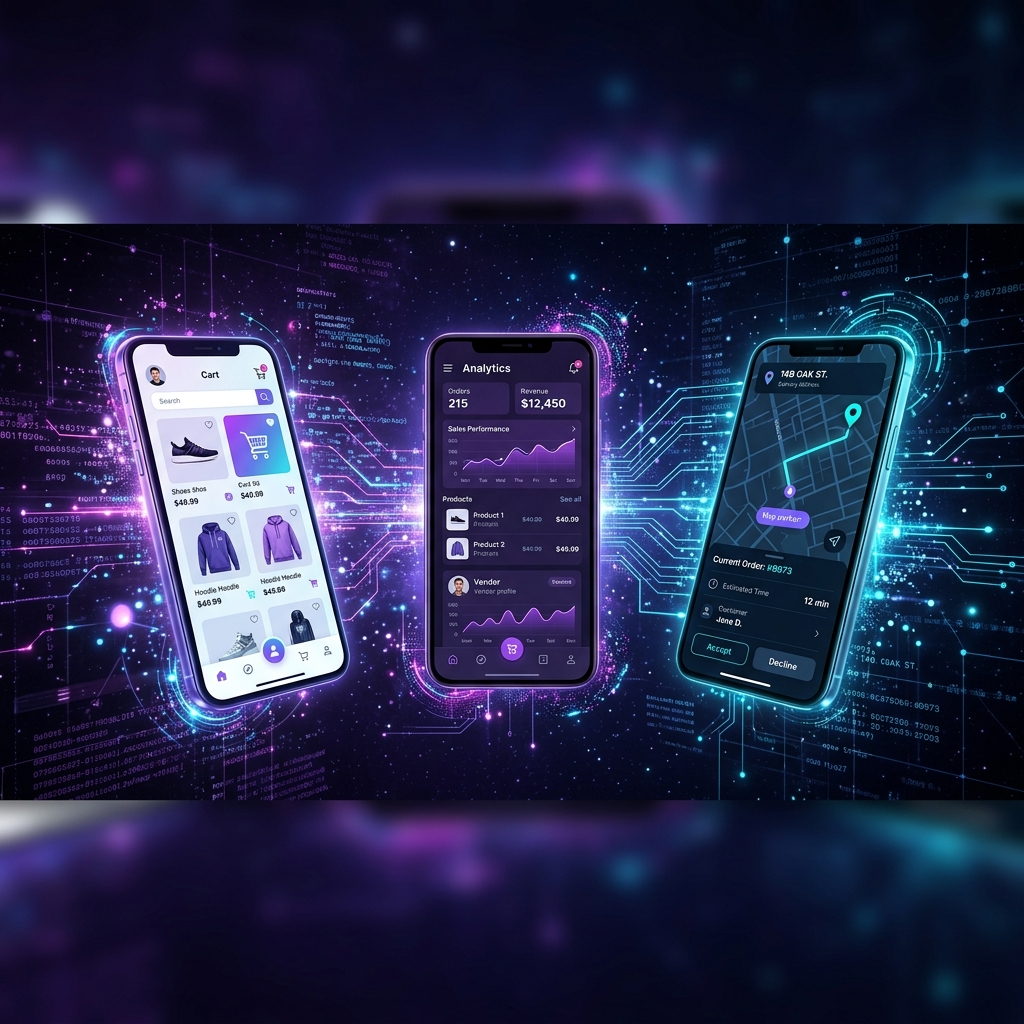
From the start, I knew KupwaraCart couldn't be just a simple shopping app. To truly solve the problem, I needed to build an entire ecosystem. After studying how platforms like Swiggy and DoorDash operate, I designed a triple-app architecture:
- Customer App — For browsing products, placing orders, and tracking deliveries in real-time
- Seller Dashboard — For local shop owners to manage inventory, accept/reject orders, and track sales analytics
- Delivery Rider App — For delivery partners to accept rides, navigate to locations, and manage earnings
All three apps needed to communicate in real-time. When a customer places an order, the seller needs to see it instantly. When the seller accepts, a rider needs to be assigned. When the rider picks up the order, the customer needs to see live tracking. This required a carefully designed real-time infrastructure.
The Tech Stack
Choosing the right technology was critical. I was a solo developer building what is essentially a three-product company. I needed technologies that would let me move fast without sacrificing quality.
Frontend: React Native with Expo
I chose React Native with Expo for all three mobile apps. The ability to share roughly 80% of the codebase across iOS and Android was a game-changer for a solo developer. I created a monorepo structure with shared components, hooks, and utilities across all three apps while maintaining separate navigation stacks and app-specific logic.
The decision to use Expo instead of bare React Native was intentional. Expo's managed workflow gave me:
- Over-the-air (OTA) updates — critical for fixing bugs without going through app store review
- Built-in camera, location, and notification APIs
- EAS Build for cloud-based native builds
- Push notification infrastructure out of the box
Backend: Django + Django REST Framework
For the backend, I went with Django and Django REST Framework (DRF). Python's ecosystem is incredibly mature for building APIs, and Django's "batteries-included" philosophy meant I could focus on business logic rather than reinventing authentication, admin panels, and ORM patterns.
The backend handles order management, user authentication (JWT-based), payment processing, inventory synchronization, and push notifications. I structured the project with clearly separated Django apps:
kupwaracart-backend/
├── accounts/        # User auth, profiles, JWT tokens
├── catalog/         # Products, categories, inventory
├── orders/          # Order lifecycle, status management
├── delivery/        # Rider assignment, route optimization
├── payments/        # Payment gateway integration
├── notifications/   # Push notifications, SMS alerts
└── analytics/       # Sales dashboards, reporting
Database: PostgreSQL
PostgreSQL was the natural choice. Its support for geospatial queries via PostGIS was essential for location-based features like finding nearby stores, calculating delivery distances, and optimizing rider routes. The JSON field support also came in handy for storing flexible product attributes without needing separate tables for every product type.
The Challenges of Building for Kashmir
Building a tech product for Kashmir comes with challenges that you won't find in any Silicon Valley startup playbook:
1. Intermittent Internet Connectivity
Kashmir's internet is unreliable. We've experienced complete shutdowns, throttling to 2G speeds, and regular outages. This meant I couldn't build a typical real-time app that assumes constant connectivity. I implemented offline-first architecture with local data caching, optimistic UI updates, and a robust sync mechanism that queues actions and replays them when connectivity returns.
2. Mapping and Navigation
Google Maps in Kupwara is... incomplete. Many roads, lanes, and localities simply don't exist on the map. Delivery riders couldn't rely on standard navigation. I built a custom landmark-based navigation system where addresses include local landmarks ("Near Jamia Masjid, behind the post office") rather than relying solely on GPS coordinates.
3. Onboarding Local Merchants
Most local shop owners had never used a business app before. The seller dashboard had to be radically simple. I spent weeks visiting shops, watching how owners manage their inventory (spoiler: mostly paper notebooks), and designed the interface to mirror their existing mental models. Big buttons, Urdu/Kashmiri language support, and a one-tap order acceptance flow.
4. Payment Infrastructure
Digital payments in rural Kashmir are still evolving. While UPI adoption is growing, many customers and merchants prefer cash. I implemented a hybrid payment system supporting UPI, Cash on Delivery, and a wallet system with simple top-up via local agents.
Launch Day and Beyond
KupwaraCart launched on the Google Play Store in September 2025, followed by the Apple App Store shortly after. The initial response was beyond anything I expected. Word spread primarily through WhatsApp — the dominant communication platform in Kashmir. Within the first month, we had onboarded 20+ local merchants and were processing dozens of orders daily.
Today, KupwaraCart covers multiple product categories:
- Groceries — Daily essentials, fruits, vegetables
- Food — Local restaurants and home-based food businesses
- Fashion — Clothing and accessories from local boutiques
- Electronics — Mobile accessories, gadgets
- Daily Essentials — Personal care, home supplies
KupwaraCart is available on both Google Play Store and Apple App Store. If you're in Kashmir, give it a try!
Co-founding Lone Software Innovations
As KupwaraCart grew, it became clear that this was bigger than a solo side project. In 2026, I co-founded Lone Software Innovations Pvt Ltd with my brother Abid Hussain Lone. The company is our vehicle for building more technology solutions for underserved regions — starting with Kashmir but with ambitions to serve similar communities across India.
Beyond KupwaraCart, we are now developing K-Serve, a hyperlocal service booking platform (think Urban Company but for Kashmir) that will connect local service providers — electricians, plumbers, carpenters, tailors — with customers in the region.
Lessons Learned
Here are the biggest lessons from this journey:
- Build for your community first. You understand their problems better than any outsider. The biggest tech companies started by solving problems the founders personally experienced.
- Offline-first is not optional in regions with unreliable connectivity. It's a feature, not an afterthought.
- Talk to your users before writing code. I spent more time in shops than in front of my IDE during the design phase.
- Ship fast, iterate faster. The first version of KupwaraCart was ugly. But it worked. And every week it got better.
- WhatsApp is the best marketing channel in India. We spent ₹0 on ads. Word of mouth through WhatsApp groups did everything.
What's Next
We're just getting started. The roadmap for KupwaraCart includes AI-powered product recommendations, voice search in Kashmiri language, a subscription-based grocery delivery service, and expansion to neighboring districts like Baramulla and Bandipora. The vision for Lone Software Innovations is to become the technology backbone for commerce in Kashmir.
If you're a developer reading this, here's my ask: look around you. What problem in your community is waiting for someone to build a solution? The technology is accessible. The tools are free. The only missing piece is someone who cares enough to start. Be that person.
If you want to chat about building products for underserved markets, reach out to me on LinkedIn or X/Twitter. I'd love to hear your story.